The cost to paint a room in Melbourne is about $315 to $1,050 for the walls and ceiling of a single room as of 2026, with $680 typical, according to the independent cost guide What’s The Damage (GST included, verified October 2026). A ceiling on its own runs about $210 to $525 and a feature wall about $160 to $525. Room size, ceiling height, the condition of the walls and the colour you choose decide where your room lands.
This guide breaks those figures down room by room and explains what moves a price up or down. If you are pricing a whole house rather than a single room, start with our main guide to how much it costs to paint a house in Melbourne, which uses the same source.
How much does it cost to paint a room in Melbourne?
The table below uses the Melbourne figures published by What’s The Damage, an independent Australian cost guide. All prices include GST and were last verified in October 2026.
| Job | Low | Typical | High |
|---|---|---|---|
| Single room (walls and ceiling) | $315 | $680 | $1,050 |
| Ceiling only, per room | $210 | $335 | $525 |
| Feature wall, per wall | $160 | $315 | $525 |
| Door, both sides | $84 | $135 | $210 |
| Wallpaper removal and repaint, per room | $525 | $945 | $1,575 |
| Painter hourly rate | $42 | $63 | $105 |
| Painter day rate | $370 | $525 | $680 |
The guide’s single-bedroom figure is based on a standard room with 2.7 metre ceilings. It also notes that painter costs in Melbourne have risen around 3.9% over the past year, so older quotes and older online prices may be out of date.
These are published averages, not quotes. They are useful for setting a budget, but they can’t see your walls.
How much does it cost to paint a bedroom?
A bedroom is the classic single-room job, and the guide’s single-bedroom range is the same $315 to $1,050 as the single-room figure above. A bedroom repaint normally covers the walls and ceiling. Whether skirting boards, architraves, the door and the window frames are included varies from painter to painter, so check the quote.
Where a bedroom sits in the range depends on:
- Size. A small second bedroom has far less wall area than a main bedroom with a walk-in robe.
- Built-in robes. Painting inside robes and around shelving is slow, fiddly work.
- Colour change. Going from a dark colour to a light one, or the other way round, often needs an extra coat.
- Wall condition. Picture hooks, cracks and scuffs all need filling and sanding before painting.
For children’s rooms and nurseries, ask for a low-VOC product and allow time for the room to air before anyone sleeps in it. The paint manufacturer’s label and datasheet give drying and recoat times.
How much does it cost to paint a living room?
The guide doesn’t list living rooms as a separate line. Its single-room figure assumes a standard room, and many Melbourne living areas are bigger than that. An open-plan kitchen, family and dining area can have as much wall and ceiling as two or three standard rooms. Expect a large living area to sit at or above the top of the single-room range, and expect it to be priced on area rather than as “one room”.
Living areas also tend to have more of the things that add time:
- Several doorways, windows and openings to cut in around
- Higher or raked ceilings, and voids over stairs
- Joinery, bulkheads and feature walls in a second colour
- Furniture that has to be moved and covered in place
Because living areas get the most traffic, the finish matters too. Low sheen is the usual choice for busy living areas because it wipes clean; our paint sheen guide explains the trade-offs between matt, low sheen and semi-gloss.
How much does it cost to paint just a ceiling?
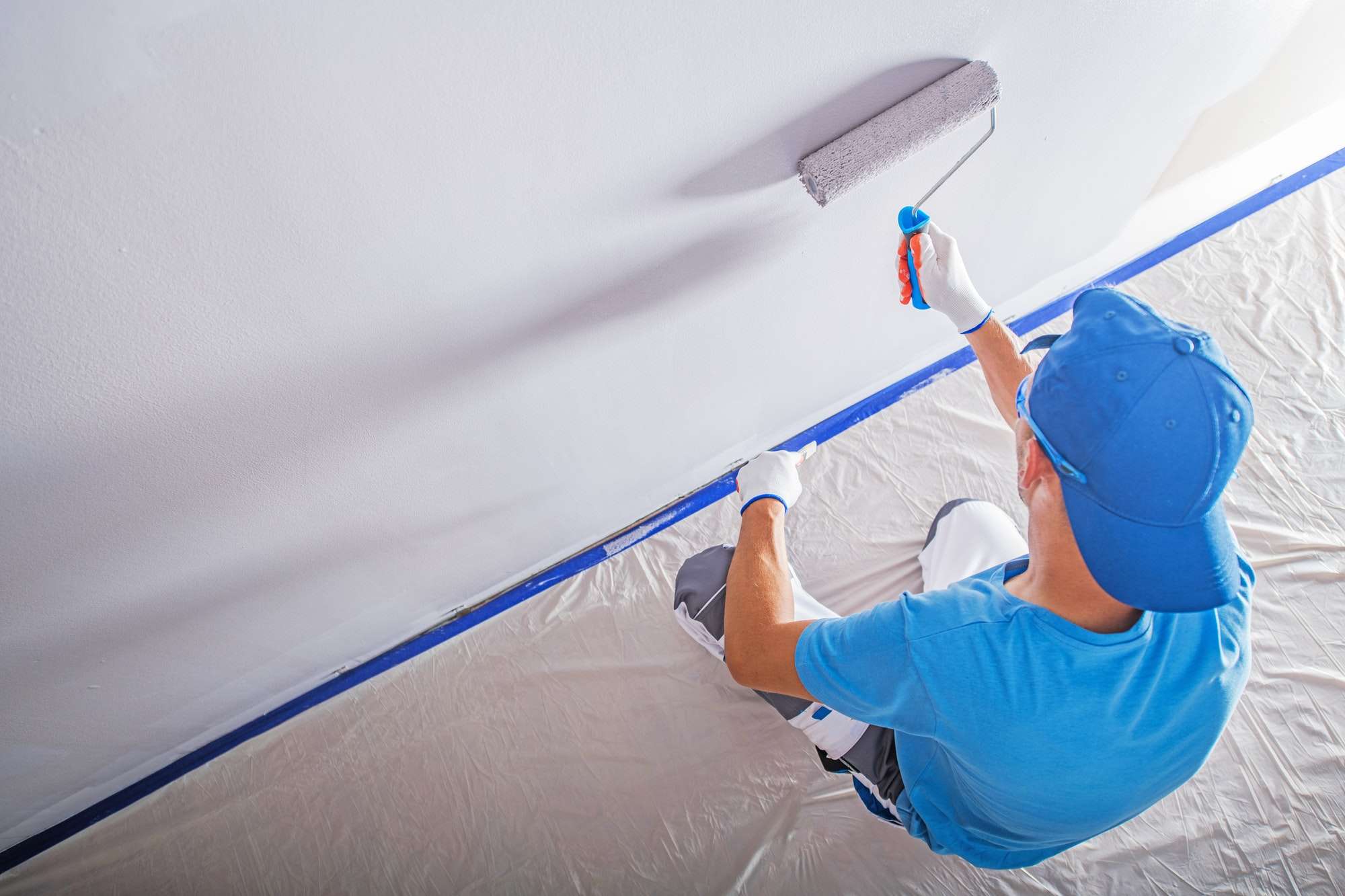
A ceiling on its own runs about $210 to $525 per room, with $335 typical, according to the same guide. Ceilings are often painted on their own when they are stained by an old leak, yellowed by cooking or smoke, or marked by mould in a bathroom.
Stains usually need a stain-blocking sealer before the ceiling paint goes on, or they bleed back through. Raked ceilings, ceilings over stairwells and very high ceilings need taller ladders, planks or a mobile platform, which adds time. What’s The Damage’s national guide to two-storey and access costs notes that void and stairwell ceilings sit at the top of the range or are quoted separately.
If mould is the reason you are repainting, fix the cause first. Our guide to painting kitchens and bathrooms covers ventilation and the paints made for humid rooms.
How much does a feature wall cost?
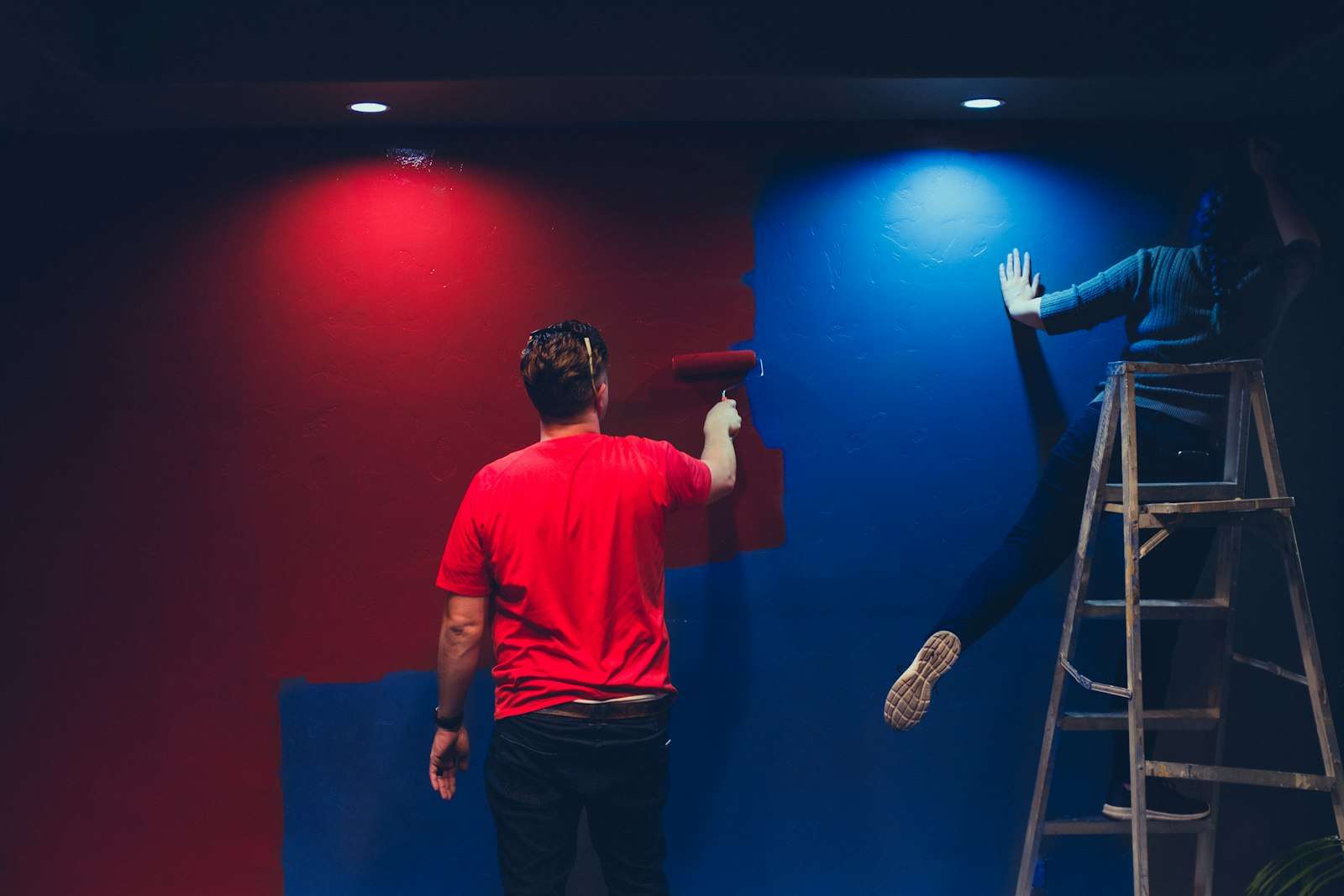
What’s The Damage lists a feature wall in Melbourne at $160 to $525 per wall, with $315 typical. The spread is wide for a single wall because so much depends on the colour:
- Deep and strong colours often need an extra coat to cover evenly.
- Crisp edges where the feature wall meets the ceiling and the adjoining walls take careful cutting in.
- A feature wall on its own carries the same set-up time as a bigger job, so it costs more per square metre than one done as part of a full room.
If you are unsure about a strong colour, test it on the wall before you commit. Our guide on how to test paint colours shows how, and a colour consultation can help you narrow the options.
Doors, trims and other extras
Woodwork is priced separately from walls more often than people expect. The guide lists a door painted on both sides at $84 to $210, with $135 typical. Skirting boards, architraves and window frames are slow to paint well because they need sanding, filling and cutting in, and older glossy enamel needs sanding or a bonding primer so the new coat sticks.
Wallpaper is another extra. The guide puts wallpaper removal and repainting at $525 to $1,575 per room, because the walls usually need repair and sealing once the paper comes off.
What changes the price of painting a room?
Two rooms of the same size can get very different quotes. These are the things a painter looks at when they walk in.
Size and ceiling height
Painters price on the area of wall, ceiling and trim, not on the type of room. A room with 3 metre ceilings has more wall to paint than the same floor plan with 2.4 metre ceilings, and it needs taller ladders.
Wall condition and repairs
Preparation is where most of the labour goes. Cracked plaster, nail holes, flaking paint, water stains and mould all add time before painting starts. A room in good condition that only needs a light sand and two coats is far quicker than one that needs patching, sealing and spot-priming.
Colour change and number of coats
A like-for-like repaint is the cheapest job. Big colour changes, deep colours, bare plaster and repaired patches can need a sealer, a primer or an extra coat.
Period detail
Ornate cornices, ceiling roses, picture rails, panelled doors and high skirtings all take time to cut in neatly. Our house painting cost guide explains how much period detail can add.
Lead paint in older homes
Homes built before 1970 are most at risk of having lead paint, according to the Australian Government’s Lead Alert guide, and lead-safe preparation takes longer. Our house painting cost guide explains how that affects a quote, and our article on lead paint in older Melbourne homes explains how to test for it.
Whether the room is furnished
An empty room is faster to paint than a full one. Clearing small items, taking down pictures and moving furniture to the middle of the room before the painters arrive saves paid time. Our checklist on preparing your home for painters covers what to do.
Is it cheaper to paint several rooms at once?
Usually, yes. Every job has fixed costs that don’t change much with size: travel, setting up drop sheets and masking, mixing colours and cleaning up. Spread across several rooms, those costs make up a smaller share of each room’s price, and the painter can move from room to room while coats dry.
The guide’s whole-home figures show the effect. A full interior for a two-bedroom unit is listed at $2,625 to $6,800, while a three-bedroom house is $4,200 to $10,000. That covers walls, ceilings and woodwork throughout, not just the bedrooms.
Should you pay by the hour or get a fixed price for one room?
For a small touch-up, an hourly rate can make sense. For a whole room, which the guide says takes about a day, a fixed written quote is usually better, as long as it lists the preparation, the paint and the number of coats. Our house painting cost guide compares hourly, day and fixed pricing, and our guide to what a painting quote should include explains what to look for.
Can you paint a room yourself?
A spare room in good condition, painted a similar light colour, is a reasonable first DIY job; ceilings, big colour changes, damaged plaster and possible lead paint are harder. Our comparison of DIY painting vs hiring a painter weighs up the time, cost and risks.
Getting a fixed price for your room
Online ranges are a starting point, but they can’t see your room. A painter who inspects in person can measure the walls, check the plaster, look for stains and old paint problems, and talk through colours and finishes. That is what turns a range into a fixed price.
At AMP Master Painters, every interior painting job starts with a free site inspection and scope, and you usually receive a written quote the next day. We have painted Melbourne homes since 1998 from our base in Doncaster East, we use premium Dulux, Taubmans and Wattyl paints, and every job carries a written 7-year guarantee.
The bottom line
As of 2026, Melbourne price guides put a single room at roughly $315 to $1,050 for walls and ceiling, a ceiling alone at $210 to $525 and a feature wall at $160 to $525. Size, ceiling height, wall condition, colour and detail decide where your room falls, and grouping rooms into one job usually lowers the cost per room. Use the ranges to set a budget, then get a fixed written quote based on an inspection.